

How to deal with someone who has brain damage
Caring for a loved one who has sustained brain damage whether through an accident, stroke, or illness is a profound responsibility that requires a shift in perspective, communication, and daily habits. Brain damage often alters the fundamental way a person processes information, regulates emotions, and interacts with their surroundings. Understanding how to deal with someone who has brain damage effectively is key to reducing frustration for both the caregiver and the patient, while fostering an environment of dignity and safety.
1. Master the Art of Patient Communication

Communication is often the first thing to change following a brain injury. A person may struggle to find the right words (aphasia), process what you are saying, or maintain a train of thought.
To support them, you must simplify your approach. Use short, direct sentences and avoid complex metaphors or sarcasm, which can be difficult for a damaged brain to decode. It is helpful to ask “closed” questions—those that require a simple ‘yes’ or ‘no’ or a choice between two clear options—rather than open-ended questions that might overwhelm them.
Most importantly, practice active patience. Give the individual significantly more time to respond than you would in a typical conversation. Rushing a person with brain damage often leads to “cognitive shutdown,” where they become too stressed to communicate at all.
2. Manage Behavioral and Personality Changes
One of the most distressing aspects of dealing with brain damage is the shift in personality. Damage to the frontal lobe can result in “disinhibition,” where a person may say or do things that are socially inappropriate, impulsive, or uncharacteristically aggressive.
When managing these outbursts, the “Three R’s” are essential:
- Remain Calm: Your emotional state directly influences theirs. If you become agitated, their agitation will likely escalate.
- Redirect: If a loved one is fixated on a frustrating topic or behavior, gently shift their attention to a different activity, a snack, or a change of scenery.
- Reframing: Remind yourself that the behavior is a symptom of a physical injury, not a personal attack. This mental shift is crucial for long-term caregiver resilience.
3. Establish a “Low-Stimulus” Environment
A brain that has suffered damage is often unable to “filter” background noise and visual clutter. A busy television, multiple people talking, or even bright, flickering lights can cause sensory overload. This overload often manifests as irritability, fatigue, or withdrawal.
To deal with this at home, especially in active urban areas like Pretoria, create a “quiet zone.” Minimize unnecessary noise and keep the living space organized. A structured environment with a consistent daily routine helps the brain navigate the day with less effort, reducing the frequency of behavioral “meltdowns.”
4. Prioritize Physical Safety and Supervision
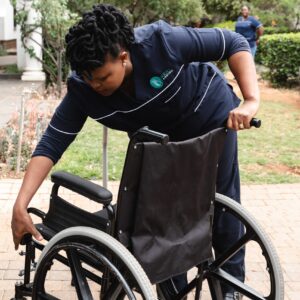
Brain damage can affect judgment and physical coordination, making the home a potentially hazardous place. Depending on the severity of the damage, the individual may forget how to use common appliances or lose their sense of direction.
Safety modifications are a must. This includes installing grab bars in bathrooms, removing rugs that could cause trips, and potentially using safety locks on stoves or exits if the person is prone to wandering. Constant supervision is often necessary, but it should be provided in a way that respects the individual’s autonomy as much as possible.
5. Utilize Professional Home-Based Care
The reality of dealing with brain damage is that it is often a 24-hour job. For many families in Gauteng, the physical and emotional toll of providing this level of care can lead to severe burnout. Integrating professional home-based care is a strategic decision that benefits the entire household.
Specialized caregivers, such as those trained in neurological support, bring a level of clinical expertise that is difficult for family members to replicate. They can assist with:
- Rehabilitation Exercises: Ensuring that physical and cognitive therapy routines are followed consistently.
- Medication Management: Many brain damage patients require precise dosages of anti-seizure or mood-stabilizing medications.
- Respite for the Family: Allowing family members to take necessary breaks to maintain their own mental health and professional lives.
6. The Importance of Routine
Predictability is a form of therapy for someone with brain damage. When the brain knows exactly what to expect from the time they wake up to the sequence of their evening routine—it doesn’t have to work as hard to navigate the world. This conservation of “brain energy” often leads to better moods and improved cognitive function over time.
Conclusion

Knowing how to deal with someone who has brain damage is not an innate skill; it is a learned discipline of empathy, structure, and professional support. By focusing on simplified communication, environmental management, and the inclusion of professional caregivers, you can significantly improve the quality of life for your loved one.